

Loyalty cards for nail salons, spas and massage shops — how to set rules that bring customers back
· 6 min read
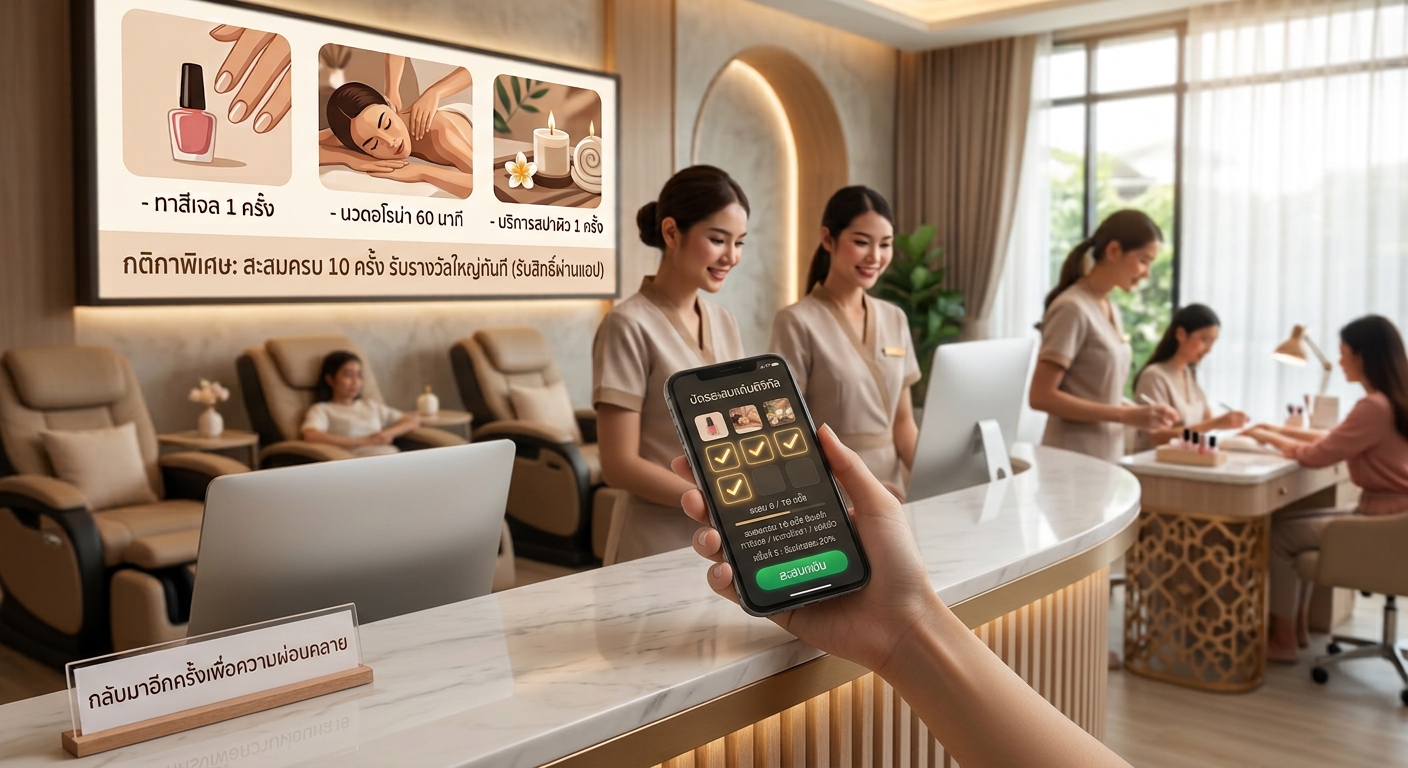
Track visits by phone number instead of a paper card, set a target customers can actually reach, such as 10 visits = 1 free, and pick a reward the shop can afford with a cap on its value. Then write clear rules on what counts as a visit and when visits expire, and tell customers at every checkout how many visits they have left.
The problem with paper stamp cards
Paper cards are cheap and easy to make, but after a while most shops run into the same problems.
- Customers lose the card or forget to bring it, then ask you to stamp it later
- Stamps are easy to copy, so you can't be sure which ones are real
- You can't see who is close to a reward, so you miss the chance to invite them back
When a card is lost, the visits go with it, and customers often stop caring about the card altogether, even though they still want to come back to your shop.
1. Track visits by phone number, not a card
Customers remember their phone number and don't need to carry anything. At checkout, just ask for the number and you know straight away how many times they've been.
Visits can't be lost or faked, and you can see who is close to a reward. If someone has only 1–2 visits left but hasn't been in for a while, send them a message through your shop's LINE inviting them back.
2. Set the right target and reward
The most familiar target is 10 visits = 1 free. Customers understand it and you can work out the cost. But if customers come once a month, 10 visits may feel too far away. You can choose from a few options, for example:
- 10 visits, get 1 free: suits services customers come for often, such as massage or nails
- 5 visits, get a free add-on: customers feel they reach a reward sooner
- A small reward along the way: a free add-on on the 5th visit and 1 free visit on the 10th
For the reward, pick something customers actually want but that the shop can afford.
- A low-priced, quick service, such as a gel polish on the hands or a foot massage
- An add-on, such as a scrub, a hand mask or an extra 30 minutes of massage
- If you give 1 free visit, set a cap on its value, for example up to 500 baht, with the customer paying anything above that
A value cap stops customers collecting visits on cheap services and then redeeming them for the most expensive service in the shop.
3. Write clear rules from the start
Unclear rules are what lead to arguments at the counter. Before you start, you should be able to answer:
- What counts as a visit: every visit, or only visits above a minimum spend
- Whether it applies to all services, or excludes some, such as courses or services already on discount
- Whether visits expire, for example if the customer doesn't come in for more than 12 months
- How to count when several people come together but use one phone number
Example wording to put up in the shop or on your website:
Complete 10 visits (minimum 300 baht each) and get 1 free service worth up to 500 baht. 1 visit counted per person per day. Cannot be combined with other promotions. Visits expire if you don't visit us for more than 12 months.
4. Tell customers how many visits are left, and redeem in the system
Customers want to come back when they know a reward is close. At checkout, have staff say something short like "Just 2 more visits and the next one's free." That one sentence instantly makes the loyalty card mean something.
When a customer redeems a reward, always mark it in the admin. The visits are deducted and recorded, so staff don't have to remember, and nobody has to argue with the customer about whether it was already used. With MineTurn, the Pro plan includes a digital loyalty card tracked by phone number: 10 visits = 1 free, redeemed in the admin.
Summary
A loyalty card that works doesn't need to be complicated. Track by phone number so visits are never lost, set a target customers can actually reach, choose a reward the shop can afford with a value cap, write clear rules, and tell customers every time how many visits they have left.